Human adenoviruses (Ads) generally cause mild self-limiting infections but can lead to serious disease and even be fatal in high-risk individuals, underscoring the importance of understanding how the virus counteracts host defense mechanisms. This study had two goals. First, we wished to determine the molecular basis of cholesterol homeostatic responses induced by the early region 3 membrane protein RIDα via its direct interaction with the sterol-binding protein ORP1L, a member of the evolutionarily conserved family of oxysterol-binding protein (OSBP)-related proteins (ORPs). Second, we wished to determine how this interaction regulates innate immunity to adenovirus. ORP1L is known to form highly dynamic contacts with endoplasmic reticulum-resident VAP proteins that regulate late endosome function under regulation of Rab7-GTP. Our studies have demonstrated that ORP1L-VAP complexes also support transport of LDL-derived cholesterol from endosomes to the endoplasmic reticulum, where it was converted to cholesteryl esters stored in lipid droplets when ORP1L was bound to RIDα. The virally induced mechanism counteracted defects in the predominant cholesterol transport pathway regulated by the late endosomal membrane protein Niemann-Pick disease type C protein 1 (NPC1) arising during early stages of viral infection. However, unlike NPC1, RIDα did not reconstitute transport to endoplasmic reticulum pools that regulate SREBP transcription factors. RIDα-induced lipid trafficking also attenuated proinflammatory signaling by Toll-like receptor 4, which has a central role in Ad pathogenesis and is known to be tightly regulated by cholesterol-rich "lipid rafts." Collectively, these data show that RIDα utilizes ORP1L in a way that is distinct from its normal function in uninfected cells to fine-tune lipid raft cholesterol that regulates innate immunity to adenovirus in endosomes.IMPORTANCE Early region 3 proteins encoded by human adenoviruses that attenuate immune-mediated pathology have been a particularly rich source of information regarding intracellular protein trafficking. Our studies with the early region 3-encoded RIDα protein also provided fundamental new information regarding mechanisms of nonvesicular lipid transport and the flow of molecular information at membrane contacts between different organelles. We describe a new pathway that delivers cholesterol from endosomes to the endoplasmic reticulum, where it is esterified and stored in lipid droplets. Although lipid droplets are attracting renewed interest from the standpoint of normal physiology and human diseases, including those resulting from viral infections, experimental model systems for evaluating how and why they accumulate are still limited. Our studies also revealed an intriguing relationship between lipid droplets and innate immunity that may represent a new paradigm for viruses utilizing these organelles.
Copyright © 2017 American Society for Microbiology.
Product Citations: 4

In Journal of Virology on 15 March 2017 by Cianciola, N. L., Chung, S., et al.
In eLife on 10 October 2016 by Zhou, W., He, Q., et al.
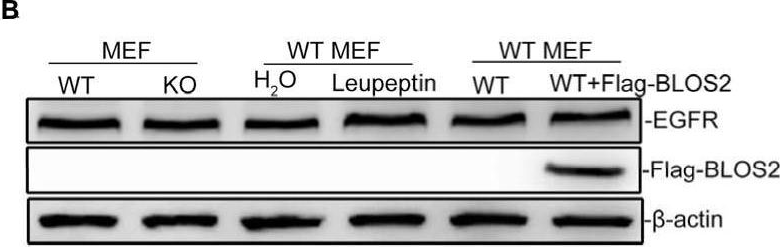
Notch signaling plays a crucial role in controling the proliferation and differentiation of stem and progenitor cells during embryogenesis or organogenesis, but its regulation is incompletely understood. BLOS2, encoded by the Bloc1s2 gene, is a shared subunit of two lysosomal trafficking complexes, biogenesis of lysosome-related organelles complex-1 (BLOC-1) and BLOC-1-related complex (BORC). Bloc1s2-/- mice were embryonic lethal and exhibited defects in cortical development and hematopoiesis. Loss of BLOS2 resulted in elevated Notch signaling, which consequently increased the proliferation of neural progenitor cells and inhibited neuronal differentiation in cortices. Likewise, ablation of bloc1s2 in zebrafish or mice led to increased hematopoietic stem and progenitor cell production in the aorta-gonad-mesonephros region. BLOS2 physically interacted with Notch1 in endo-lysosomal trafficking of Notch1. Our findings suggest that BLOS2 is a novel negative player in regulating Notch signaling through lysosomal trafficking to control multiple stem and progenitor cell homeostasis in vertebrates.
Impairment of autophagosome-lysosome fusion in the buff mutant mice with the VPS33A(D251E) mutation.
In Autophagy on 12 August 2015 by Zhen, Y. & Li, W.
The HOPS (homotypic fusion and protein sorting) complex functions in endocytic and autophagic pathways in both lower eukaryotes and mammalian cells through its involvement in fusion events between endosomes and lysosomes or autophagosomes and lysosomes. However, the differential molecular mechanisms underlying these fusion processes are largely unknown. Buff (bf) is a mouse mutant that carries an Asp251-to-Glu point mutation (D251E) in the VPS33A protein, a tethering protein and a core subunit of the HOPS complex. Bf mice showed impaired spontaneous locomotor activity, motor learning, and autophagic activity. Although the gross anatomy of the brain was apparently normal, the number of Purkinje cells was significantly reduced. Furthermore, we found that fusion between autophagosomes and lysosomes was defective in bf cells without compromising the endocytic pathway. The direct association of mutant VPS33A(D251E) with the autophagic SNARE complex, STX17 (syntaxin 17)-VAMP8-SNAP29, was enhanced. In addition, the VPS33A(D251E) mutation enhanced interactions with other HOPS subunits, namely VPS41, VPS39, VPS18, and VPS11, except for VPS16. Reduction of the interactions between VPS33A(Y440D) and several other HOPS subunits led to decreased association with STX17. These results suggest that the VPS33A(D251E) mutation plays dual roles by increasing the HOPS complex assembly and its association with the autophagic SNARE complex, which selectively affects the autophagosome-lysosome fusion that impairs basal autophagic activity and induces Purkinje cell loss.
Cell adhesion and EGFR activation regulate EphA2 expression in cancer.
In Cellular Signalling on 1 April 2010 by Larsen, A. B., Stockhausen, M. T., et al.
EphA2 is frequently overexpressed in cancer, and increasing amounts of evidence show that EphA2 contributes to multiple aspects of the malignant character including angiogenesis and metastasis. Several aspects of the regulation and functional significance of EphA2 expression in cancer are still largely unknown. Here we show that the expression of EphA2 in in vitro cultured cells, is restricted to cells growing adherently and that adhesion-induced EphA2 expression is dependent upon activation of the epidermal growth factor receptor (EGFR), mitogen activated protein kinase kinase (MEK) and Src family kinases (SRC). Moreover, the results show that adhesion-induced EGFR activation and EphA2 expression is affected by interactions with extracellular matrix (ECM) proteins working as integrin ligands. Stimulation with the EphA2 ligand, ephrinA1 inhibited ERK phosphorylation and cancer cell viability. These effects were however abolished by activation of the EGF-receptor ligand system favoring Ras/MAPK signaling and cell proliferation. Based on our results, we propose a regulatory mechanism where cell adhesion induces EGFR kinase activation and EphA2 expression; and where the effect of ephrinA1 mediated reduction in cell viability by inhibiting EphA2 expression is overruled by activated EGFR in human cancer cells.
Copyright 2009 Elsevier Inc. All rights reserved.
In Elife on 10 October 2016 by Zhou, W., He, Q., et al.
Fig.8.B
-
WB
-
Collected and cropped from eLife by CiteAb, provided under a CC-BY license
Image 1 of 1