The mechanisms driving the progression from acutely decompensated (AD) cirrhosis to acute-on-chronic liver failure (ACLF), a high mortality condition, remain poorly understood. In this study, we integrate multiomics and clinical data from 766 AD patients to construct multiscale, multifactorial response networks associated with two major outcomes: ACLF development and death. Among 291 features, 22 are linked to ACLF development and 16 to mortality. These features constitute a network connecting mitochondrial dysfunction with the accumulation of the lipid mediator 20-hydroxyeicosatetraenoic acid (20-HETE). In vitro validation of this network in human peripheral leukocytes shows that 20-HETE induces mitochondrial oxidative stress and impairs mitochondrial respiration via a GPR75-Akt signaling pathway. Network features also act as early predictors of AD outcomes, a finding validated in an independent cohort of 580 patients. Here, we show a strong link between dysregulated immunomodulatory lipid mediators and mitochondrial dysfunction driving ACLF development and mortality risk in advanced cirrhosis.
© 2026. The Author(s).
Product Citations: 20

In Nature Communications on 22 May 2026 by Casulleras, M., Aguilar, F., et al.
Preprint on BioRxiv : the Preprint Server for Biology on 3 November 2025 by Tyrrell, V., Zaragkoulias, A., et al.
Like all coronaviruses, severe acute respiratory syndrome coronavirus 2 (SARS-CoV-2) is surrounded by a lipid envelope hosting spike and other critical proteins. However, little is known about the biology of coronavirus membranes, their regulation by inflammation/disease, nor how they could be harnessed to dampen infection. Here, we show using lipidomics that four cultured SARS-CoV-2 strains (England2 (Wuhan), Alpha (B.1.1.7), Beta (B.1.351) and Delta (B.1.617.2)) contain highly conserved phospholipid (PL)/cholesterol-rich membranes. PL that drive blood clotting and support infectivity (phosphatidylserine (PS) and phosphatidylethanolamine (PE)) were 70-80% external-facing, particularly for Alpha and Beta strains. Interleukin-4 (IL-4) caused a 10-fold increase in secreted virions with dramatically-altered phospholipid fatty acyl saturation. In contrast, envelopes were not impacted by IL-6 (with/without its soluble receptor IL-6Ra) or dexamethasone-treatment of host cells. SARS-CoV-2 membranes isolated from patients were remarkably conserved and cholesterol enriched. Several pro-coagulant oxidized phospholipid damage-associated molecular patterns (DAMPs) and oxylipins generated by lipoxygenases (LOX), were detected in clinical viruses. Furthermore, using gene silencing, we found that 15-LOX2 was required for replication of coronaviruses MERS-CoV and HCoV-229E in macrophages, indicating a shared requirement for LOX products. In summary, the coronavirus envelope contains numerous bioactive lipids with known impacts on inflammation and thrombosis, as well supporting replication, and is altered by disease-relevant host inflammatory factors. This confirms the envelope as a target for therapeutic strategies via direct modulation of host innate immunity.
In Journal of Hazardous Materials on 5 July 2024 by Roux, C., Madru, C., et al.
Urban ecosystems are subjected to multiple anthropogenic stresses, which impact aquatic communities. Artificial light at night (ALAN) for instance can significantly alter the composition of algal communities as well as the photosynthetic cycles of autotrophic organisms, possibly leading to cellular oxidative stress. The combined effects of ALAN and chemical contamination could increase oxidative impacts in aquatic primary producers, although such combined effects remain insufficiently explored. To address this knowledge gap, a one-month experimental approach was implemented under controlled conditions to elucidate effects of ALAN and dodecylbenzyldimethylammonium chloride (DDBAC) on aquatic biofilms. DDBAC is a biocide commonly used in virucidal products, and is found in urban aquatic ecosystems. The bioaccumulation of DDBAC in biofilms exposed or not to ALAN was analyzed. The responses of taxonomic composition, photosynthetic activity, and fatty acid composition of biofilms were examined. The results indicate that ALAN negatively affects photosynthetic yield and chlorophyll production of biofilms. Additionally, exposure to DDBAC at environmental concentrations induces lipid peroxidation, with an increase of oxylipins. This experimental study provides first insights on the consequences of ALAN and DDBAC for aquatic ecosystems. It also opens avenues for the identification of new biomarkers that could be used to monitor urban pollution impacts in natural environments.
Copyright © 2024 The Authors. Published by Elsevier B.V. All rights reserved.
Aspirin eugenol ester ameliorates LPS-induced inflammatory responses in RAW264.7 cells and mice.
In Frontiers in Pharmacology on 14 September 2023 by Liu, X., Tao, Q., et al.
Introduction: Inflammation is a defensive response of the body and the pathological basis of many diseases. However, excessive inflammation and chronic inflammation impair the homeostasis of the organism. Arachidonic acid (AA) has a close relationship with inflammation and is the main mediator of the pro-inflammatory response. Based on the prodrug principle, the new pharmaceutical compound aspirin eugenol ester (AEE) was designed and synthesized. However, the effects of AEE on key enzymes, metabolites and inflammatory signaling pathways in the AA metabolic network have not been reported. Methods: In this study, the anti-inflammation effects of AEE were first investigated in mice and RAW264.7 cells in LPS induced inflammation model. Then, the changes of the key enzymes and AA metabolites were explored by RT-PCR and targeted metabolomics. Moreover, the regulatory effects on NF-kB and MAPKS signaling pathways were explored by Western Blotting. Results: Results indicated that AEE significantly reduced the number of leukocyte and increased the lymphocyte percentage. AEE decreased the expression levels of IL-1β, IL-6, IL-8 and TNF-α both in vivo and in vitro. In the liver of mice, AEE downregulated the levels of AA, prostaglandin D2 (PGD2) and upregulated 12- hydroxyeicosatetraenoic acid (12-HETE). However, the changes of PGE2, PGF2α, 6-keto-prostaglandin F1α (6-KETO-PGF1α), 9-hydroxy-octadecenoic acid (9- HODE), 13-HODE, 15-HETE, docosahexaenoic acid (DHA) and thromboxane B2 (TXB2) were not significant. Additionally, it was found that AEE decreased the relative mRNA expression levels of p65 and p38 and the ratio of p-p65/p65. Discussion: It was concluded that AEE might inhibit the LPS-induced inflammatory response through the regulation of AA metabolism. This study provides the theoretical foundation for the development of AEE as a medicinal anti-inflammatory drug.
Copyright © 2023 Liu, Tao, Shen, Liu, Yang, Ma and Li.
In Blood Advances on 25 April 2023 by Zheng, T. J., Kohs, T. C. L., et al.
Low-density lipoprotein (LDL) contributes to atherogenesis and cardiovascular disease through interactions with peripheral blood cells, especially platelets. However, mechanisms by which LDL affects platelet activation and atherothrombosis, and how to best therapeutically target and safely prevent such responses remain unclear. Here, we investigate how oxidized low-density lipoprotein (oxLDL) enhances glycoprotein VI (GPVI)-mediated platelet hemostatic and procoagulant responses, and how traditional and emerging antiplatelet therapies affect oxLDL-enhanced platelet procoagulant activity ex vivo. Human platelets were treated with oxLDL and the GPVI-specific agonist, crosslinked collagen-related peptide, and assayed for hemostatic and procoagulant responses in the presence of inhibitors of purinergic receptors (P2YR), cyclooxygenase (COX), and tyrosine kinases. Ex vivo, oxLDL enhanced GPVI-mediated platelet dense granule secretion, α-granule secretion, integrin activation, thromboxane generation and aggregation, as well as procoagulant phosphatidylserine exposure and fibrin generation. Studies of washed human platelets, as well as platelets from mouse and nonhuman primate models of hyperlipidemia, further determined that P2YR antagonists (eg, ticagrelor) and Bruton tyrosine kinase inhibitors (eg, ibrutinib) reduced oxLDL-mediated platelet responses and procoagulant activity, whereas COX inhibitors (eg, aspirin) had no significant effect. Together, our results demonstrate that oxLDL enhances GPVI-mediated platelet procoagulant activity in a manner that may be more effectively reduced by P2YR antagonists and tyrosine kinase inhibitors compared with COX inhibitors.
Licensed under Creative Commons Attribution-NonCommercial-NoDerivatives 4.0 International (CC BY-NC-ND 4.0), permitting only noncommercial, nonderivative use with attribution.
In Pathogens on 10 November 2022 by Volzke, J., Brendel, M., et al.
Fig.4.D
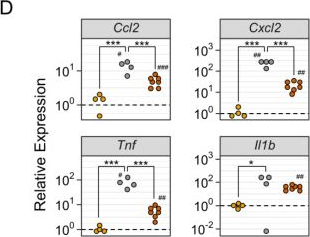
Collected and cropped from Pathogens by CiteAb, provided under a CC-BY license
Image 1 of 1