African swine fever (ASF) and classical swine fever (CSF) are highly contagious diseases with high morbidity and mortality rates resulting in an enormous impact on the global pig industry. A bivalent vaccine that simultaneously protects against both ASF and CSF is highly desirable. We previously developed a seven-gene-deleted African swine fever virus (ASFV) attenuated vaccine candidate (HLJ/18-7GD) that provides complete protection against homologous strains. Herein, we constructed a recombinant virus HLJ/18-7GD-E2 by inserting the classical swine fever virus (CSFV) E2 gene into the HLJ/18-7GD via homologous recombination. After continuous in vitro passaging, Western blotting analysis showed that the E2 gene was expressed and stably maintained within the ASFV genome. Next, the immunogenicity and protective efficacy of the recombinant HLJ/18-7GD-E2 virus was evaluated in pigs. The results revealed that a single dose of 106 TCID50 of HLJ/18-7GD-E2 induced an efficient immune response and provided complete protection against lethal challenges with ASFV or CSFV. These results demonstrate that recombinant ASFV expressing the CSFV E2 protein has potential as a bivalent live attenuated vaccine, providing solid protection against ASFV and CSFV infection in pigs.
Product Citations: 84
In Emerging Microbes Infections on 1 December 2025 by Zhang, J., Li, F., et al.
-
Immunology and Microbiology
-
Veterinary Research
NKp30 and NKG2D contribute to natural killer cell-mediated recognition of HIV-infected cells.
In IScience on 17 October 2025 by Pi, R., Zhao, N. Q., et al.
Natural killer (NK) cells respond rapidly in early HIV-1 infection. HIV-1 prevention and control strategies harnessing NK cells could be enabled by mechanistic understanding of how NK cells recognize HIV-infected T cells. Here, we profiled the phenotype of human primary NK cells responsive to autologous newly HIV-infected CD4 T cells in vitro. We characterized the patterns of NK cell ligand expression on CD4 T cells at baseline and after infection with a panel of transmitted/founder HIV-1 strains to identify key receptor-ligand pairings. CRISPR editing of CD4 T cells to knock out the NKp30 ligand B7-H6, or the NKG2D ligand MICB reduced NK cell responses to HIV-infected cells in some donors. Blockade of NKp30 or NKG2D on NK cells compromised their specificity of killing HIV-infected cells. Collectively, we identified receptor-ligand pairs including NKp30:B7-H6 and NKG2D:MICB that contribute to NK cell recognition of HIV-infected cells.
© 2025 The Author(s).
Preprint on BioRxiv : the Preprint Server for Biology on 4 March 2025 by Newsam, A. D., Ziccheddu, B., et al.
ABSTRACT CD19-directed chimeric antigen receptor (CAR)-T cells are breakthrough therapies for aggressive B-cell lymphomas, but less than half of patients achieve durable responses. We previously showed through whole-genome sequencing of tumors from CAR-T-treated patients that deletions of RHOA (3p21.31) are enriched in cases progressing after treatment. RHOA ’s roles in resistance and pathogenesis are poorly defined, despite loss-of-function alterations that occur in ~20% of newly diagnosed diffuse large B-cell lymphoma (DLBCL) cases. To evaluate mechanisms of CAR-T resistance, we created RHOA-deficient DLBCL systems and confirmed cell-intrinsic loss of response to CAR-19 in vitro and in vivo. RHOA loss promotes AKT activation that impairs cell-intrinsic responses to interferon gamma (IFNγ). Moreover, expression of the CAR target CD19 is consistently down-regulated accompanied by a drive toward plasmablast differentiation. RHOA deficient tumors demonstrate greatly increased sensitivity to AKT-pathway inhibitors, which reverse impaired IFNγ responses. Lymphoma microenvironments in vivo in immunocompetent mice reveal that RHOA loss promotes decreased infiltration by cytotoxic T cells and enrichment of M2-polarized macrophages, known markers of CAR-T resistance in lymphoma clinical cases. Overall, we characterize RHOA deficiency as an AKT-mediated CAR-T resistance driver and implicate avoidance of T-cell mediated killing as a likely reason for RHOA’s frequent loss in DLBCL pathogenesis.
-
Cancer Research
-
Immunology and Microbiology
Ad26.M.Env ZIKV vaccine protects pregnant rhesus macaques and fetuses against Zika virus infection.
In NPJ Vaccines on 28 August 2024 by Martinot, A. J., Cox, F., et al.
At the start of the Zika virus (ZIKV) epidemic in 2015, ZIKV spread across South and Central America, and reached parts of the southern United States placing pregnant women at risk for fetal microcephaly, fetal loss, and other adverse pregnancy outcomes associated with congenital ZIKA syndrome (CZS). For this reason, testing of a safe and efficacious ZIKV vaccine remains a global health priority. Here we report that a single immunization with Ad26.M.Env ZIKV vaccine, when administered prior to conception, fully protects pregnant rhesus macaques from ZIKV viral RNA in blood and tissues with no adverse effects in dams and fetuses. Furthermore, vaccination prevents ZIKV distribution to fetal tissues including the brain. ZIKV associated neuropathology was absent in offspring of Ad26.M.Env vaccinated dams, although pathology was limited in fetuses from non-immunized, challenged dams. Vaccine efficacy is associated with induction of ZIKV neutralizing antibodies in pregnant rhesus macaques. These data suggest the feasibility of vaccine prevention of CZS in humans.
© 2024. The Author(s).
-
ELISpot
-
Macaca mulatta (Rhesus Monkey)
-
Endocrinology and Physiology
-
Immunology and Microbiology
In Frontiers in Immunology on 14 May 2024 by Kim, E. S., Islam, J., et al.
Tuberculous pleural effusion (TPE) stands as one of the primary forms of extrapulmonary tuberculosis (TB) and frequently manifests in regions with a high prevalence of TB, consequently being a notable cause of pleural effusion in such areas. However, the differentiation between TPE and parapneumonic pleural effusion (PPE) presents diagnostic complexities. This study aimed to evaluate the potential of myeloid-derived suppressor cells (MDSCs) in the pleural fluid as a potential diagnostic marker for distinguishing between TPE and PPE.
Adult patients, aged 18 years or older, who presented to the emergency room of a tertiary referral hospital and received a first-time diagnosis of pleural effusion, were prospectively enrolled in the study. Various immune cell populations, including T cells, B cells, natural killer (NK) cells, and MDSCs, were analyzed in both pleural fluid and peripheral blood samples.
In pleural fluid, the frequency of lymphocytes, including T, B, and NK cells, was notably higher in TPE compared to PPE. Conversely, the frequency of polymorphonuclear (PMN)-MDSCs was significantly higher in PPE. Notably, compared to traditional markers such as the neutrophil-to-lymphocyte ratio and adenosine deaminase level, the frequency of PMN-MDSCs emerged as a more effective discriminator between PPE and TPE. PMN-MDSCs demonstrated superior positive and negative predictive values and exhibited a higher area under the curve in the receiver operating characteristic curve analysis. PMN-MDSCs in pleural effusion increased the levels of reactive oxygen species and suppressed the production of interferon-gamma from T cells following nonspecific stimulation. These findings suggest that MDSC-mediated immune suppression may contribute to the pathology of both TPE and PPE.
The frequency of PMN-MDSCs in pleural fluid is a clinically useful indicator for distinguishing between TPE and PPE.
Copyright © 2024 Kim, Islam, Lee, Seong, Youn, Kwon, Kim and Lee.
-
FC/FACS
-
Homo sapiens (Human)
-
Cardiovascular biology
-
Immunology and Microbiology
In PLoS One on 4 July 2017 by Bughani, U., Saha, A., et al.
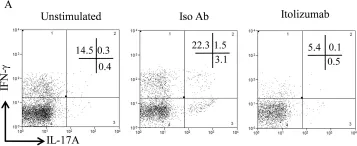
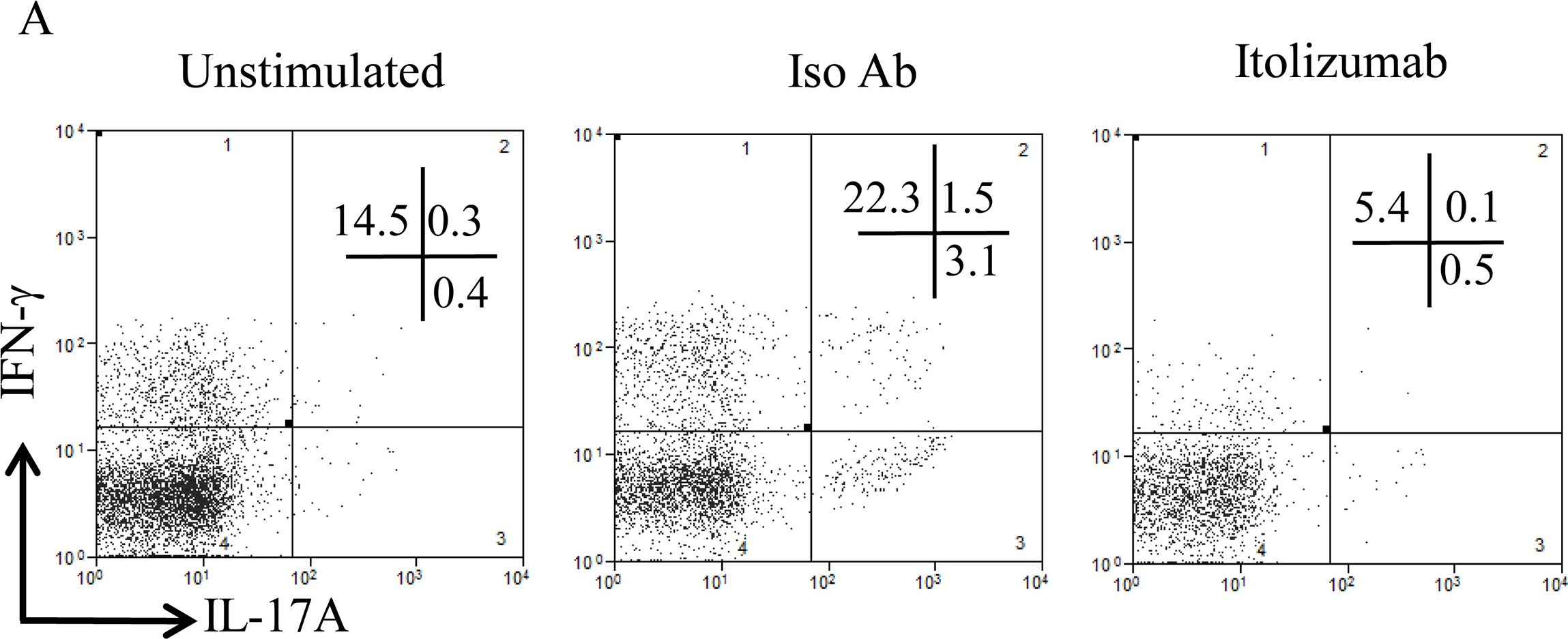
Fig.3.A
-
ELISA
-
Homo sapiens (Human)
Collected and cropped from PLoS ONE by CiteAb, provided under a CC-BY license
Image 1 of 2
In PLoS Pathog on 1 September 2011 by Petitdemange, C., Becquart, P., et al.
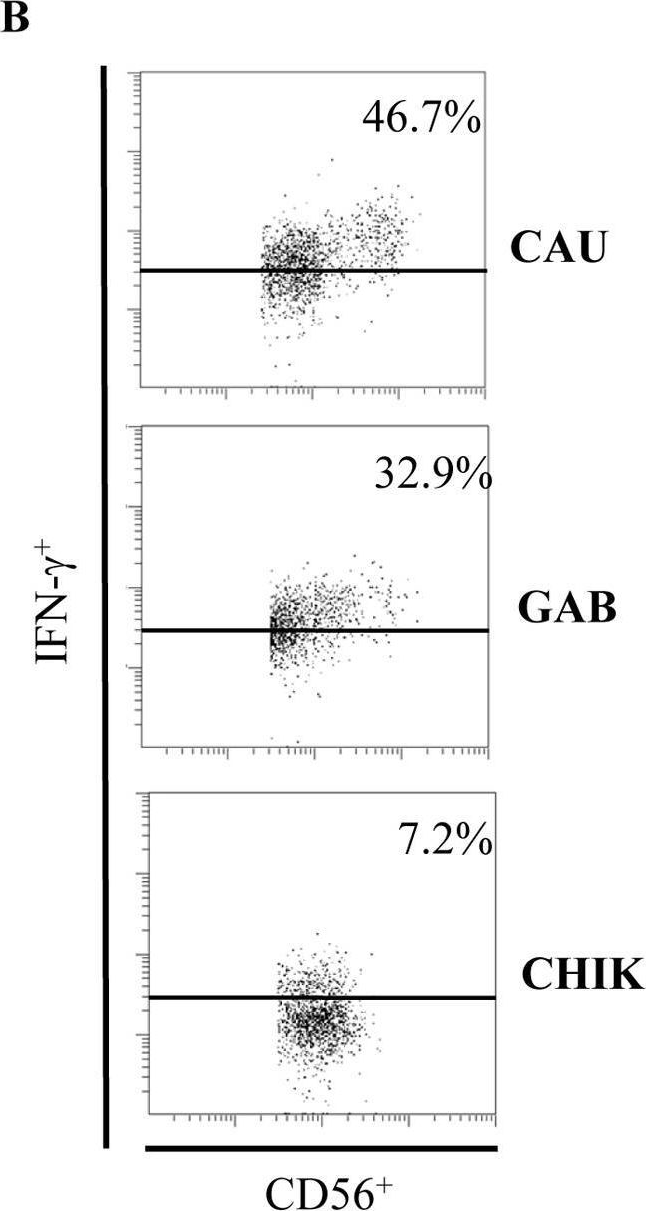
Fig.6.B
-
FC/FACS
-
Collected and cropped from PLoS Pathogens by CiteAb, provided under a CC-BY license
Image 1 of 2