Product Citations: 6
Caspase-2 inhibits mitochondrial respiration in colorectal adenocarcinoma cells.
In Cell Communication and Signaling : CCS on 20 January 2026 by Sillapachaiyaporn, C., Yapryntseva, M. A., et al.
-
WB
-
Homo sapiens (Human)
-
Cancer Research
-
Cell Biology
-
Endocrinology and Physiology
In Cell Death Discovery on 11 June 2022 by Hååg, P., Olsson, M., et al.
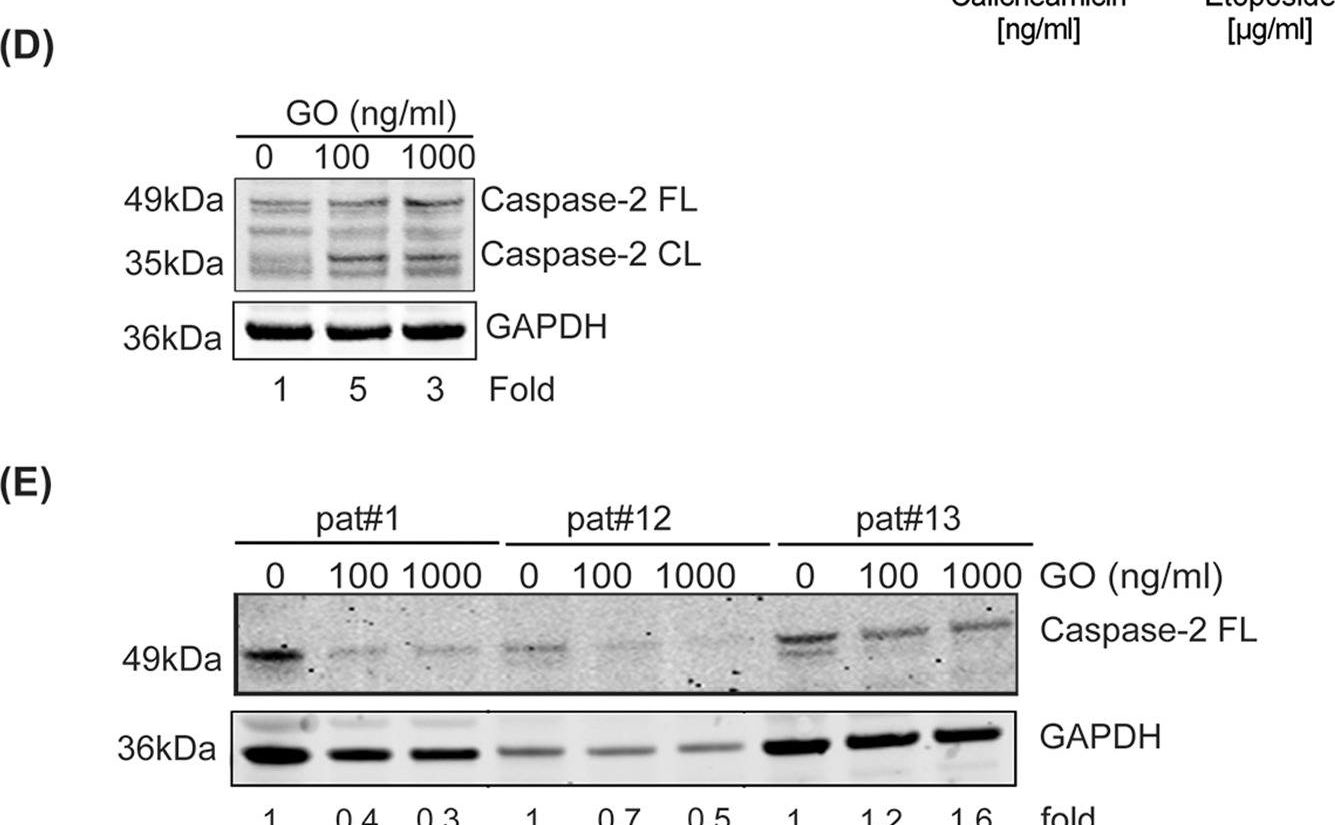
The antibody conjugate gemtuzumab ozogamicin (GO; Mylotarg®) provides targeted therapy of acute myeloid leukemia (AML), with recent approvals for patients with CD33-positive disease at diagnosis or relapse, as monotherapy or combined with chemotherapeutics. While its clinical efficacy is well documented, the molecular routes by which GO induces AML cell death warrant further analyses. We have earlier reported that this process is initiated via mitochondria-mediated caspase activation. Here we provide additional data, focusing on the involvement of caspase-2 in this mechanism. We show that this enzyme plays an important role in triggering apoptotic death of human AML cells after exposure to GO or its active moiety calicheamicin. Accordingly, the caspase-2 inhibitor z-VDVAD-fmk reduced GO-induced caspase-3 activation. This finding was validated with shRNA and siRNA targeting caspase-2, resulting in reduced caspase-3 activation and cleavage of poly [ADP-ribose] polymerase 1 (PARP-1). We previously demonstrated that GO-induced apoptosis included a conformational change of Bax into a pro-apoptotic state. Present data reveal that GO-treatment also induced Bid cleavage, which was partially reduced by caspase-2 specific inhibition while the effect on GO-induced Bax conformational change remained unaltered. In mononuclear cells isolated from AML patients that responded to GO treatment in vitro, processing of caspase-2 was evident, whereas in cells from an AML patient refractory to treatment no such processing was seen. When assessing diagnostic samples from 22 AML patients, who all entered complete remission (CR) following anthracycline-based induction therapy, and comparing patients with long versus those with short CR duration no significant differences in baseline caspase-2 or caspase-3 full-length protein expression levels were found. In summary, we demonstrate that GO triggers caspase-2 cleavage in human AML cells and that the subsequent apoptosis of these cells in part relies on caspase-2. These findings may have future clinical implications.
© 2022. The Author(s).
-
WB
-
Homo sapiens (Human)
-
Cancer Research
A high-throughput pipeline for validation of antibodies.
In Nature Methods on 1 November 2018 by Sikorski, K., Mehta, A., et al.
Western blotting (WB) is widely used to test antibody specificity, but the assay has low throughput and precision. Here we used preparative gel electrophoresis to develop a capture format for WB. Fractions with soluble, size-separated proteins facilitated parallel readout with antibody arrays, shotgun mass spectrometry (MS) and immunoprecipitation followed by MS (IP-MS). This pipeline provided the means for large-scale implementation of antibody validation concepts proposed by an international working group on antibody validation (IWGAV).
-
PAGE-MAP
-
Homo sapiens (Human)
In Autophagy on 23 November 2017 by Allavena, G., Cuomo, F., et al.
Macroautophagy/autophagy inhibition under stress conditions is often associated with increased cell death. We found that under nutrient limitation, activation of CASP8/caspase-8 was significantly increased in autophagy-deficient lung cancer cells, which precedes mitochondria outer membrane permeabilization (MOMP), CYCS/cytochrome c release, and activation of CASP9/caspase-9, indicating that under such conditions the activation of CASP8 is a primary event in the initiation of apoptosis as well as essential to reduce clonogenic survival of autophagy-deficient cells. Starvation leads to suppression of CFLAR proteosynthesis and accumulation of CASP8 in SQSTM1 puncta. Overexpression of CFLARs reduces CASP8 activation and apoptosis during starvation, while its silencing promotes efficient activation of CASP8 and apoptosis in autophagy-deficient U1810 lung cancer cells even under nutrient-rich conditions. Similar to starvation, inhibition of protein translation leads to efficient activation of CASP8 and cell death in autophagy-deficient lung cancer cells. Thus, here for the first time we report that suppressed translation leads to activation of CASP8-dependent apoptosis in autophagy-deficient NSCLC cells under conditions of nutrient limitation. Our data suggest that targeting translational machinery can be beneficial for elimination of autophagy-deficient cells via the CASP8-dependent apoptotic pathway.
-
Homo sapiens (Human)
-
Biochemistry and Molecular biology
-
Cell Biology
PRIMA-1Met induces mitochondrial apoptosis through activation of caspase-2.
In Oncogene on 15 December 2016 by Shen, J., Vakifahmetoglu, H., et al.
-
Cancer Research
-
Cell Biology
In Cell Death Discov on 11 June 2022 by Hååg, P., Olsson, M., et al.
Fig.1.D
-
WB
-
Collected and cropped from Cell Death Discovery by CiteAb, provided under a CC-BY license
Image 1 of 1